
Article
Peptides and the FDA: what the October 2026 decision does and does not do
Six peptides are now covered by a federal enforcement discretion policy. That is a pause on enforcement, not an approval, and it leaves the missing human trials missing.
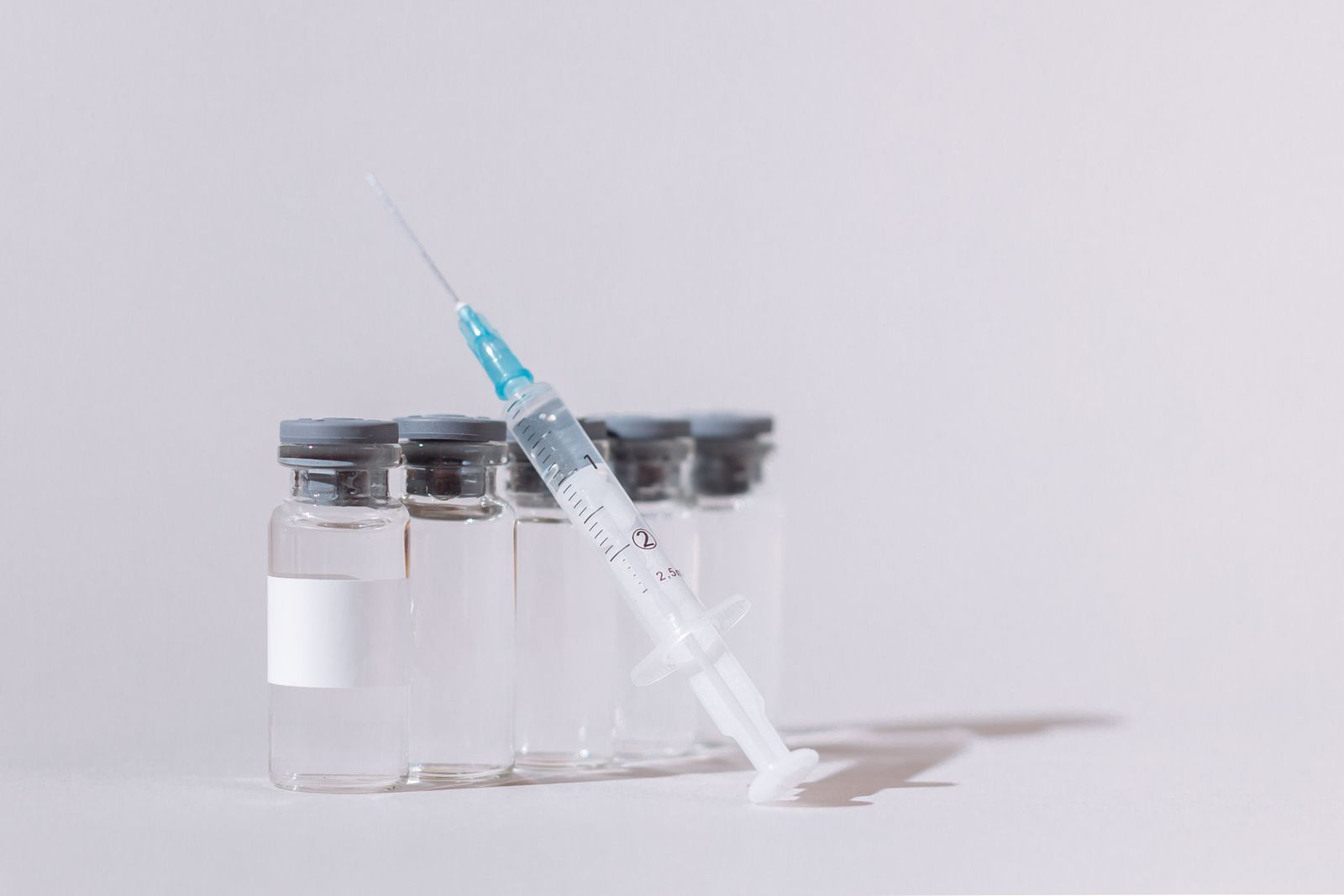
Peptides are short fragments of proteins. They attach to receptors and signal the body to do something: release growth hormone, calm inflammation, heal tissue. As a drug class they are legitimate and well established. Roughly 100 peptide drugs are approved, about 150 are in clinical trials, and several hundred more are in preclinical work [1]. The compounds sold online for recovery, fat loss, and tissue repair are a different group from the approved drugs, and the difference is the evidence. In October 2026 the federal government changed how it treats six of them. The change is narrower than the headlines suggest, and it does not touch the evidence problem.
What changed in 2026
In July 2026, the FDA's Pharmacy Compounding Advisory Committee reviewed seven peptides for the 503A bulks list, the list of bulk substances a compounding pharmacy may legally use. It voted to recommend six: BPC-157, KPV, TB-500, MOTS-c, Epitalon, and Semax. It voted against the seventh, emideltide, also known as DSIP, a sleep peptide [2].
On October 30, 2026, the Department of Health and Human Services published a draft enforcement discretion policy in the Federal Register [3]. Under it, HHS does not intend to take enforcement action against a state-licensed 503A pharmacy, a federal facility, or a licensed physician compounding one of the six peptides, when the conditions in the policy are met. The policy is a draft, open for public comment until November 13, 2026, and it is not binding.
What the policy does not do matters more than what it does. It approves no drug, and the policy says plainly that compounded drugs are not FDA-approved. It does not add any peptide to the 503A bulks list; that still requires FDA rulemaking. It does not cover 503B outsourcing facilities, which supply clinics in bulk. It does not cover products sold as research use only, and it does not cover intravenous use, injectable KPV or Semax, or combination products. Each peptide is covered only in the specific form and route the policy lists, for example BPC-157 as the acetate by subcutaneous or intramuscular injection, orally, or topically. A product outside those forms and routes is not covered, even if it contains one of the six peptides.
Why there are no human trials
A search of the trial literature for these compounds turns up animal work, limited even there, and almost no human trials in five decades. Four explanations are usually given, and they are not mutually exclusive.
The patent problem. A fragment of a protein the body already makes is hard to protect. Medroxyprogesterone acetate exists because a company modified natural progesterone into something patentable, and the modification changed how the molecule behaves. Without exclusivity, no sponsor recovers the cost of a trial program. The counterpoint is that modified analogs, salts, delivery systems, and dosing regimens are all patentable, and several of these peptides do hold patents. A patent problem is a partial explanation, not a complete one.
The cost problem. A trial program capable of winning approval runs into the hundreds of millions of dollars. Recruitment, controls, and endpoints at statistical significance are the expensive parts, and someone has to expect a return.
The gray market problem. The compounds are already sold everywhere, which destroys the exclusivity a trial sponsor would be paying to create. A company that runs the trials would compete with sellers who ran none.
The verdict problem. The simpler explanation: compounds that worked clearly would have attracted the money by now. The money examples run in both directions. Guaifenesin was a fifty-cent generic for decades before a branded version reached twenty dollars on the strength of an approved indication. Sildenafil was developed for pulmonary arterial hypertension and became Viagra when trial patients reported erections. Companies do find money in old molecules when the indication is real.
The counterexample that proves a path exists
Bremelanotide is a peptide, and it went through the process. It failed several times on its way through development, then won approval in June 2019 for acquired generalized hypoactive sexual desire disorder in premenopausal women. The approval rested on two identical phase 3 trials, RECONNECT, which randomized 1,267 women to as-needed subcutaneous bremelanotide 1.75 mg or placebo for 24 weeks [4]. Both trials met their endpoints: desire scores rose and distress related to low desire fell, each with statistical significance against placebo. Nausea was the most common adverse event, in about 40 percent of treated participants against 1.3 percent on placebo. The indication is narrow, and the trials say nothing about men, postmenopausal women, or daily use. The point is that a peptide with a real indication and a sponsor willing to run the trials can get through.
MOTS-c shows the other side. The mitochondrial-derived peptide improved metabolic measures in mice [5]. A synthetic analog, CB4211, completed a phase 1a/1b trial in 2019 to 2021, including a four-week placebo-controlled study in 20 obese subjects with fatty liver disease (ClinicalTrials.gov NCT03998514), and did not advance to phase 2. A phase 2a trial of unmodified MOTS-c was registered in 2026. Five decades after these compounds were first described, that is the state of the human record: one analog through phase 1, no phase 2 result.
The immune tolerance problem
A protein fragment the body has not seen before can be read as friend or as foe. Immunogenicity is a recognized problem in peptide drug development: the immune system can clear a foreign fragment, and repeated exposure can teach it to do so faster [1]. DSIP, the sleep peptide the committee voted against, is the standing example in clinical use: patients report that it works for a few days and then stops. The further concern, and it is a concern rather than a finding, is that if the immune system learns to react to a fragment, it may react to the similar fragment the body produces itself. Cycling peptides rather than running them continuously is the cautious practice that follows from that concern.
What the evidence actually says about BPC-157
BPC-157 is the most sold of the six, and its record is the thinnest relative to its claims. A 2025 systematic review searched three databases for every BPC-157 study it could find [6]. Of 36 included studies, 35 were preclinical and one was clinical. The clinical study was a retrospective look at 12 patients given an injection of BPC-157 into the knee for chronic pain of unspecified cause; 7 reported relief lasting more than six months. There was no control group. Human pharmacokinetics are unknown: nobody has published how much of a given dose reaches the circulation, how long it stays active, or what dose would be right for a given problem. The review found no clinical safety data at all.
Interpretation
Enforcement discretion is a pause on enforcement. It is not a finding that any of these compounds is safe or effective, and it is not an approval. One argument made for the move is harm reduction: the gray market was already supplying these compounds from unknown sources, and licensed pharmacies under supervision are a safer channel than the alternative. That argument is about supply, not about whether the compounds work.
For a person considering one of these peptides, the questions have not changed. What is the mechanism, and is it defined? What human trial supports the indication, at what dose, for how long? What is known about safety? A compound with no mechanism, no human trial, no known dose, and no safety data is not an early opportunity. It is a product whose claims cannot currently be checked, and claims that cannot be checked tend to grow. The October 2026 policy changes where a prescription can legally be filled. It changes nothing about the evidence behind the prescription.
Sources
- Muttenthaler M, King GF, Adams DJ, Alewood PF. Trends in peptide drug discovery. Nature Reviews Drug Discovery. 2021;20(4):309-325. https://doi.org/10.1038/s41573-020-00135-8
- US Food and Drug Administration. Briefing Document, Pharmacy Compounding Advisory Committee Meeting, July 23-24, 2026.
- US Department of Health and Human Services. Enforcement Discretion Policy Regarding 503A Compounding Using Certain Peptide Bulk Drug Substances. Federal Register. October 30, 2026;91 FR 68526. FR Doc. 2026-22192.
- Kingsberg SA, Clayton AH, Portman D, Williams LA, Krop J, Jordan R, Lucas J, Simon JA. Bremelanotide for the treatment of hypoactive sexual desire disorder: two randomized phase 3 trials. Obstetrics and Gynecology. 2019;134(5):899-908. https://doi.org/10.1097/AOG.0000000000003500
- Lee C, Zeng J, Drew BG, et al. The mitochondrial-derived peptide MOTS-c promotes metabolic homeostasis and reduces obesity and insulin resistance. Cell Metabolism. 2015;21(3):443-454. https://doi.org/10.1016/j.cmet.2015.02.009
- Vasireddi N, Hahamyan H, Salata MJ, et al. Emerging use of BPC-157 in orthopaedic sports medicine: a systematic review. HSS Journal. 2025. https://doi.org/10.1177/15563316251355551
- ClinicalTrials.gov. A study of CB4211 in subjects with non-alcoholic fatty liver disease (NAFLD) with obesity. NCT03998514.
Topics: SupplementsLongevity science